10 Gentle Skincare Products for Sensitive Skin
Affiliate Disclosure: This post contains affiliate links. As an Amazon Associate I earn from qualifying purchases, at no extra cost to you. Buying through these links helps support Blushra and keeps our guides free to read. Product prices and availability can change, so please check Amazon for the latest details. See the Affiliate Disclosure page for more information.
Sensitive skin makes itself known quickly. A new cream stings, a scented wash leaves your cheeks pink, a product everyone else loves makes your skin feel tight by lunchtime. The problem is rarely that your skin is difficult. Usually the products are too strong, too fragranced, or not made with reactive skin in mind.
This is a shortlist, not a shopping spree. Ten gentle products, grouped by step, widely chosen by people with sensitive skin. You do not need all ten. Pick one from each step you use, patch test it, and give it a few weeks. The products matter less than how you use them, so each step below also covers the technique, because with sensitive skin the technique is often the difference between calm skin and a flare-up.
Sensitive skin is not a medical diagnosis, and this is not medical advice. If your skin is often sore, cracked, very red, or does not settle after you simplify your routine, speak to a dermatologist rather than trying more products.
What makes a product gentle
Two things matter most. First, fragrance, from perfume, essential oils, or scent chemicals, is one of the most common irritants. Fragrance free is the safer label. Unscented is not quite the same, as a product can be unscented and still contain masking fragrance.
Second, a calm formula. Look for gentle, soothing, and for sensitive skin on the label, and for ceramides, glycerin, and hyaluronic acid, which help skin hold moisture. Be more careful with strong exfoliating acids, high-strength vitamin C, and retinoids while your skin is reactive. They are not bad ingredients, but they ask a lot of skin that is already struggling, and they can be added back slowly once your basics feel comfortable.
Patch testing still matters, even with gentle products. Put a small amount behind your ear or along your jawline once a day for two or three days, and watch for stinging that does not fade, redness, or small bumps. Only then use it on your whole face. It feels slow, but one reaction avoided is worth three days of patience.
1. A cream cleanser that does not strip
A good cleanser for sensitive skin should leave your face feeling clean and calm, not squeaky or tight. That squeaky feeling is not cleanliness, it is your skin barrier asking for help. Cream cleansers are usually kinder than foaming washes, because they clean without taking as much moisture with them.
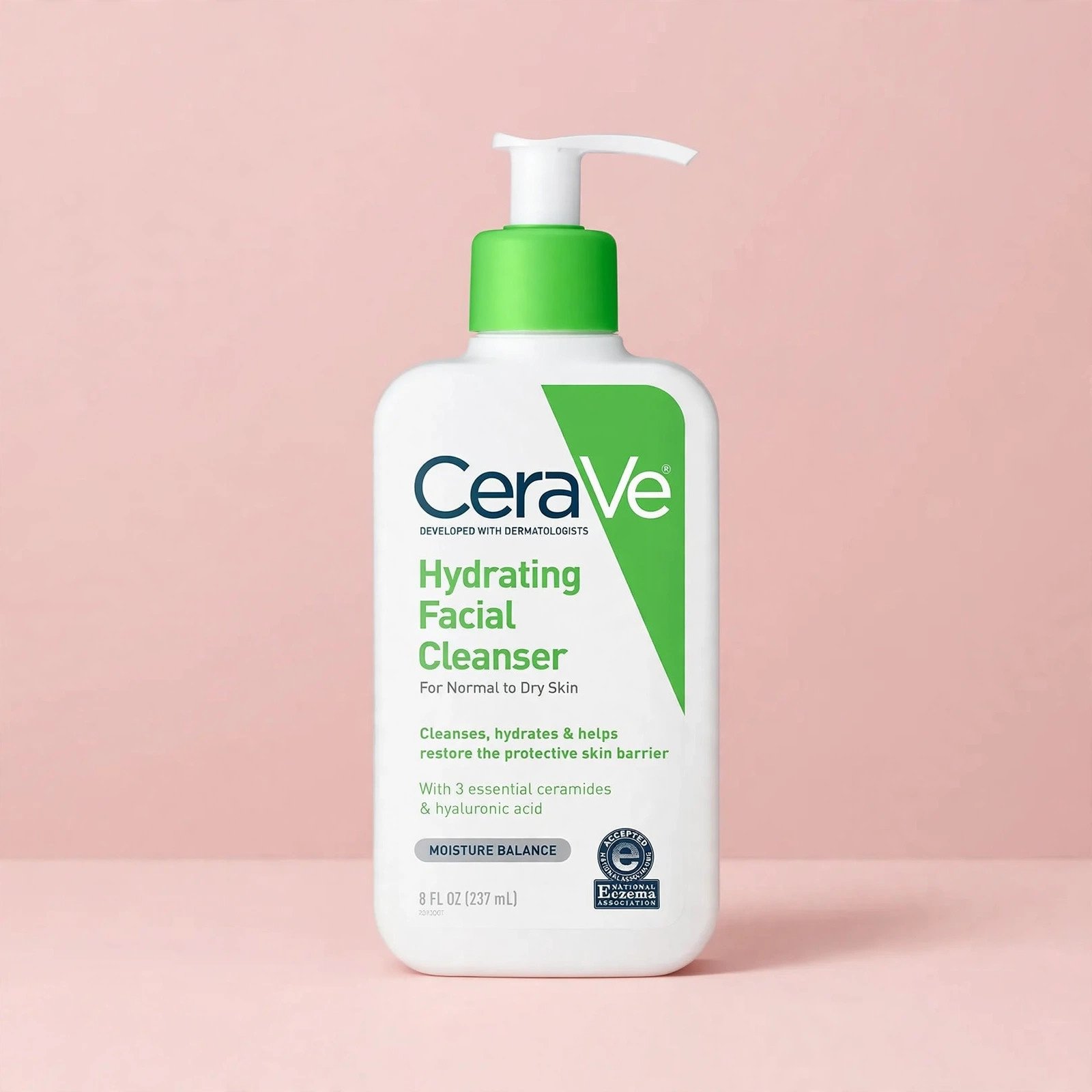
CeraVe Hydrating Facial Cleanser
a fragrance free cream cleanser with ceramides and hyaluronic acid, for normal to dry sensitive skin.
Technique matters as much as the product. Use lukewarm water, never hot, and massage the cleanser in with your fingertips for about thirty seconds. That is long enough to lift sunscreen and the day’s oil without scrubbing. Rinse well and pat dry with a soft towel instead of rubbing. If your skin is very dry, you can also skip the morning cleanse and just rinse with water, then cleanse properly at night. Many sensitive faces do better washed once a day, not twice.
2. A micellar water for light days
On days when you have not worn makeup or sunscreen, micellar water can be a softer way to cleanse. It lifts away light dirt and oil without a full wash, which suits skin that reacts to being washed too often.
Use it gently or it defeats the purpose. Soak the cotton pad fully, hold it against your skin for a few seconds so the micelles can lift what is there, then wipe once, slowly. Dragging a half-dry pad back and forth is friction, and friction is a common trigger. If your skin is very reactive, rinse with water afterwards even though the bottle says you do not need to. The cleansing agents left sitting on the skin all evening bother some people.
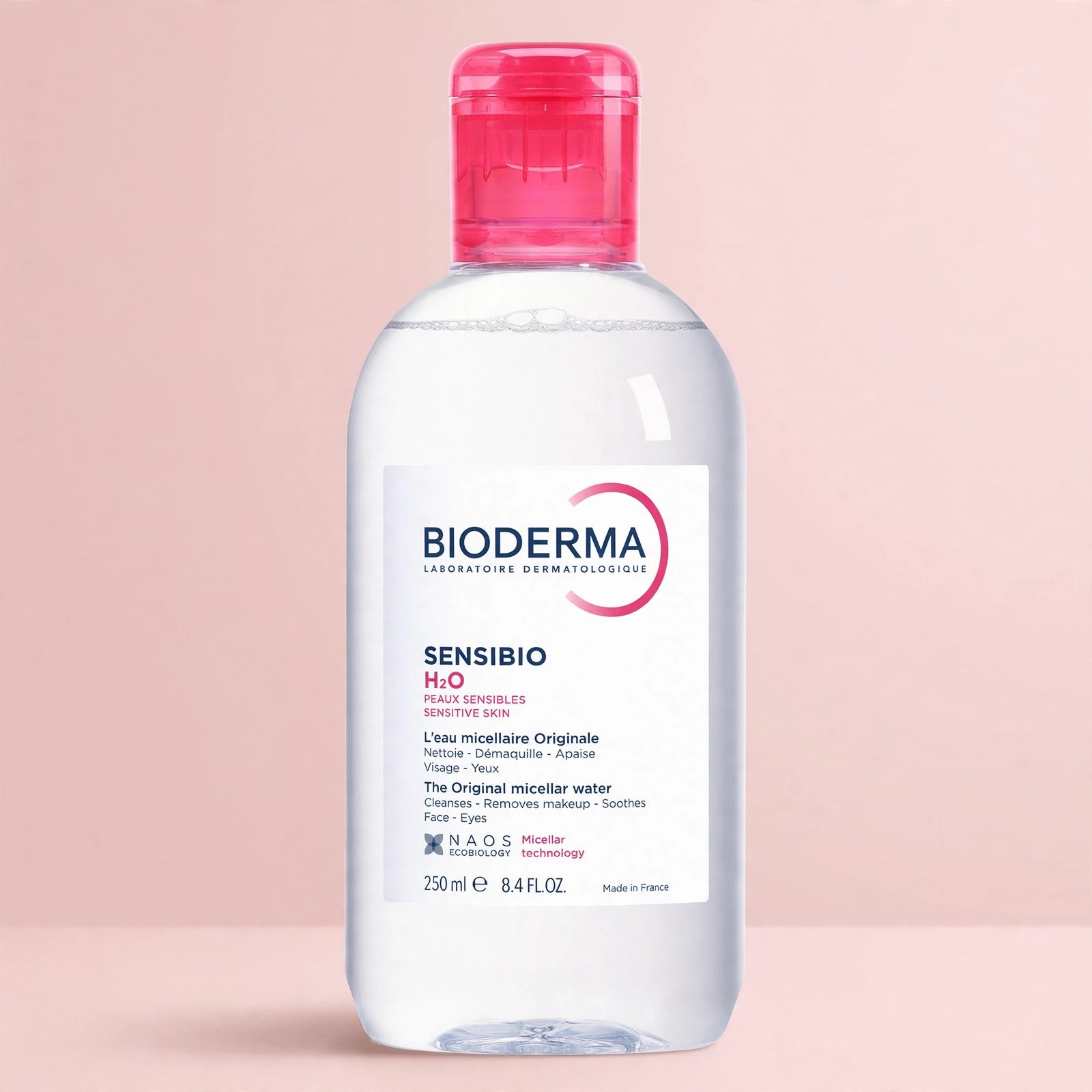
Bioderma Sensibio H2O Micellar Water
a fragrance free micellar water for sensitive skin. Soak a cotton pad, wipe gently, and follow with moisturiser.
3. A simple moisturiser you can use twice a day
Moisturiser is the backbone of a sensitive skin routine. It protects the skin barrier and locks in water. One plain, reliable moisturiser used morning and night is worth more than three fancy creams.
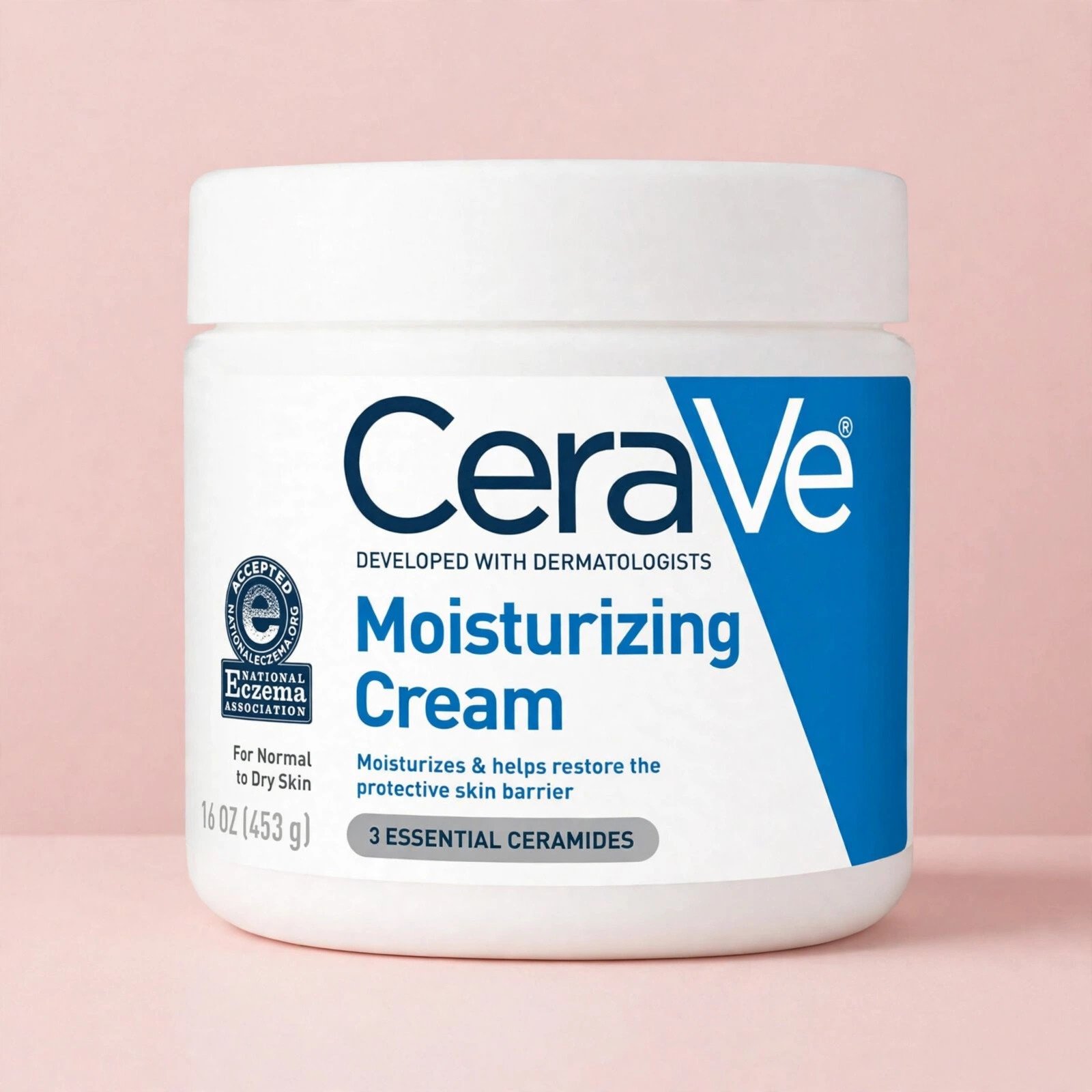
CeraVe Moisturizing Cream
a fragrance free cream with ceramides and hyaluronic acid, for face and body.
Apply it to slightly damp skin, within a minute or two of washing. Damp skin absorbs it better and the cream seals that water in, so the same product works harder. Use about a pea-sized amount for your face and a little more if you take it down your neck. If a moisturiser stings on already irritated skin, that is useful information rather than something to push through. Skin that stings at plain moisturiser is usually telling you to simplify further and give it rest days with nothing but water and patience.
4. A lighter lotion for oily or combination sensitive skin
Sensitive does not always mean dry. Some skin gets shiny by midday and still stings with a strong product. A light, oil free lotion gives moisture without adding shine.
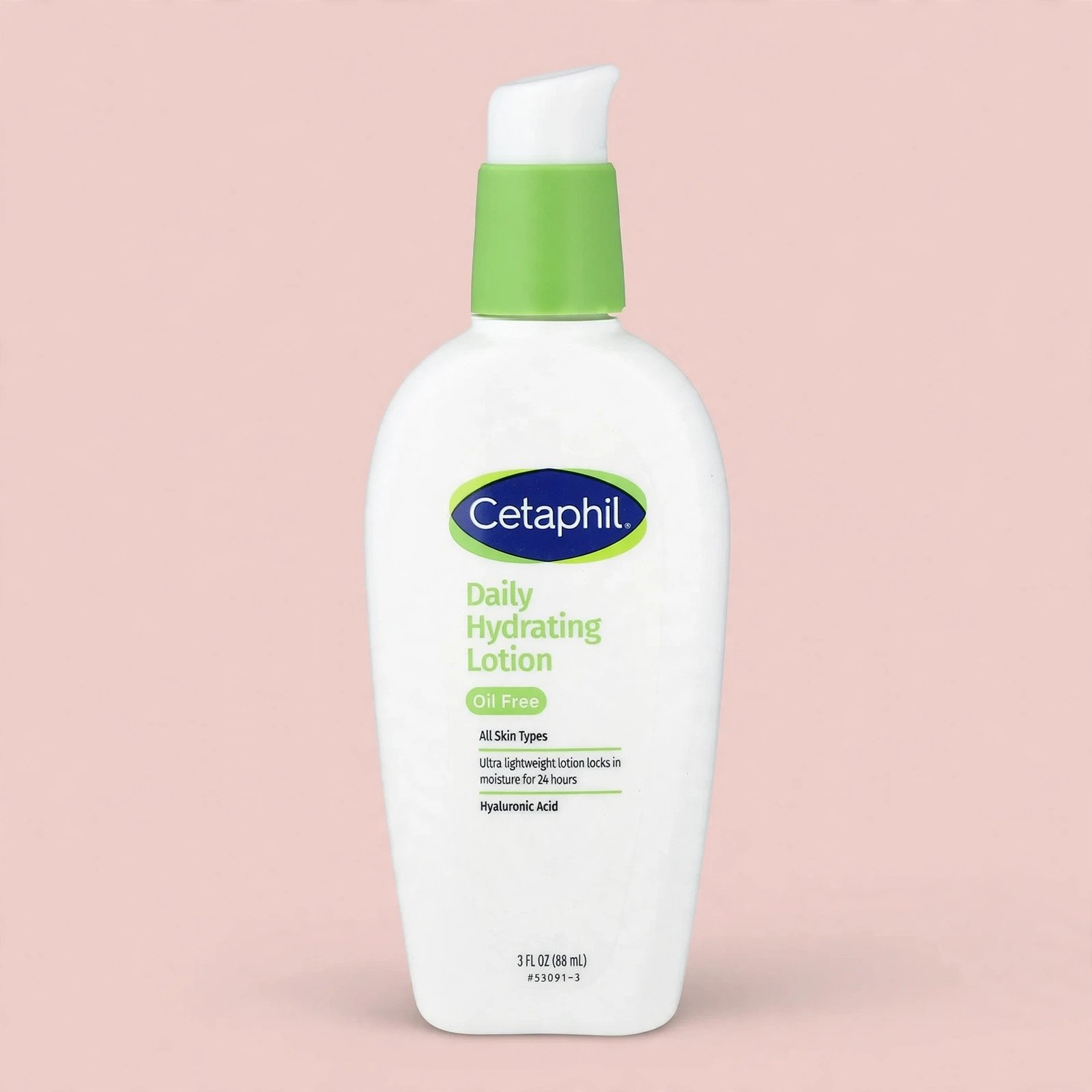
Cetaphil Daily Hydrating Lotion with Hyaluronic Acid
a light fragrance free face lotion that absorbs quickly and layers well under sunscreen.
The difference is mostly water content. Creams are thick and rich, lotions are lighter, and gels are lightest of all. If a cream feels heavy or leaves you greasy by noon, step down to a lotion rather than skipping moisturiser altogether, because oily sensitive skin still needs the barrier support. Many people also switch with the seasons, a lotion in summer and a cream in winter, which is a sensible rhythm rather than indecision.
5. A mineral sunscreen that sits kindly
Sunscreen is the step sensitive skin needs most and tolerates least. Mineral sunscreens, with zinc oxide or titanium dioxide, tend to be gentler than chemical sunscreens, because they sit on the surface of the skin rather than being absorbed into it.
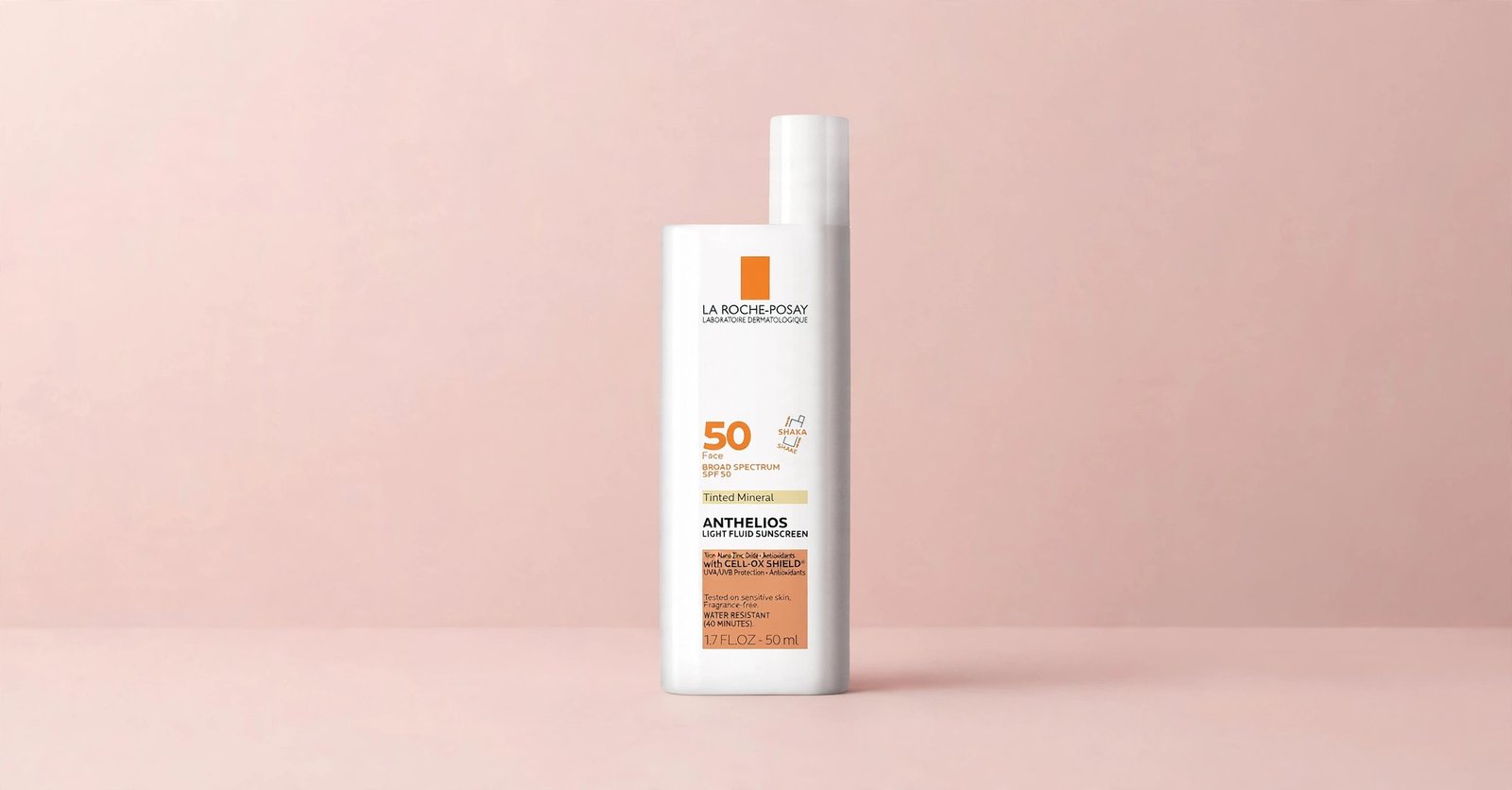
La Roche-Posay Anthelios Mineral Sunscreen SPF 50
a broad spectrum mineral sunscreen, oil free and fragrance free. Apply last in the morning.
Most people underapply sunscreen by a lot. For your face and neck, squeeze a line along two fingers, that is roughly the right amount. Apply it as the last step in the morning, give it a few minutes to settle before makeup, and reapply if you are outdoors for hours or sweating. The known drawback of mineral formulas is a white cast. Working in two thin layers instead of one thick one helps, and a tinted version can help too if plain white bothers you. A sunscreen you will actually wear every day beats a perfect one that stays in the drawer.
6. A soothing serum for red or reactive days
A serum is optional, but a simple soothing one can help on days when skin feels flushed. Keep it to one calm ingredient, such as centella or panthenol, rather than a blend of many actives.
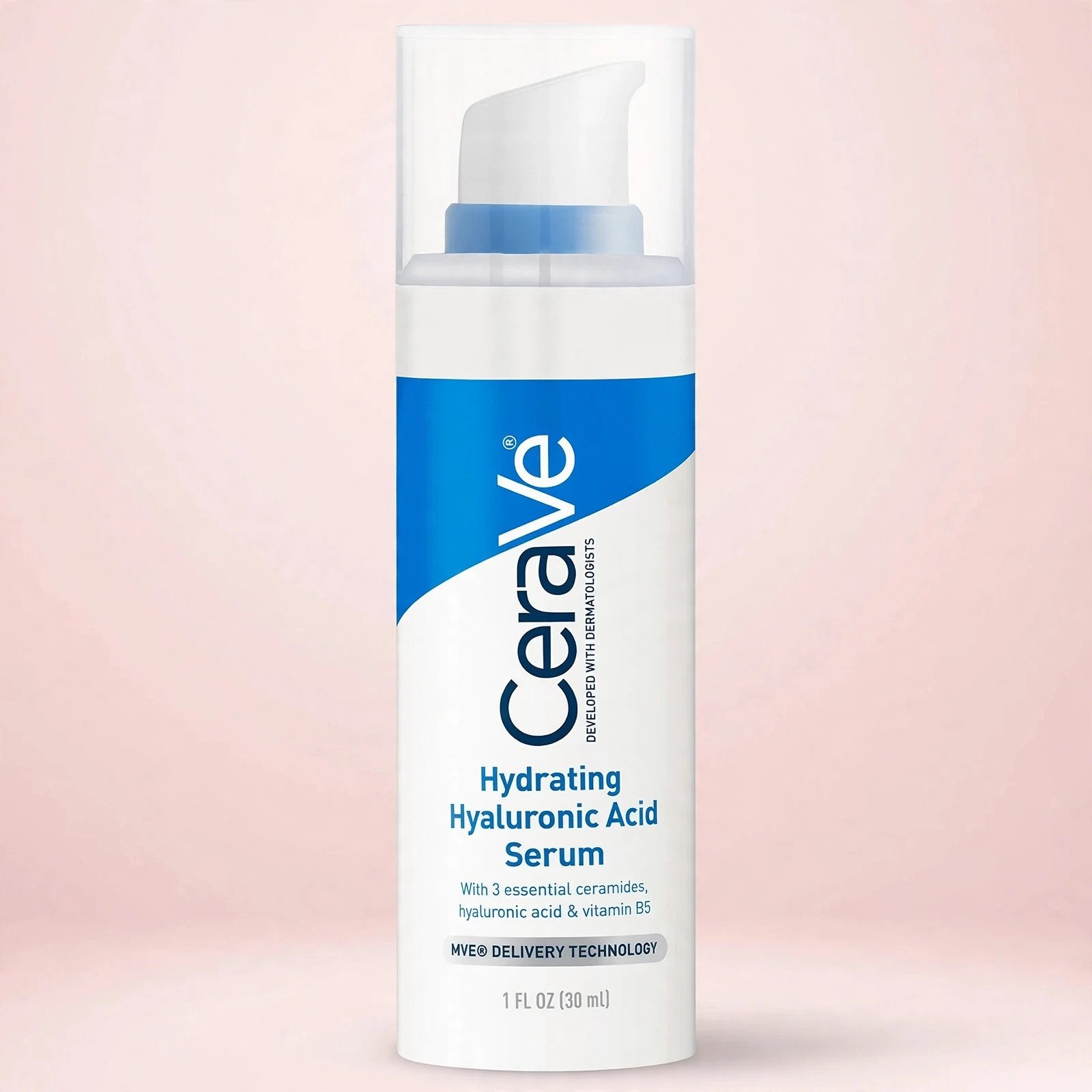
CeraVe Hydrating Hyaluronic Acid Serum
a fragrance free hydrating serum with hyaluronic acid, ceramides and vitamin B5. Use a few drops after cleansing, before moisturiser.
Order matters. A serum goes on after cleansing and before moisturiser, on skin that is still a touch damp, and a few drops is genuinely enough. Introduce it the way you would any new product, a few times a week at first, not twice a day from day one. And keep the rest of your routine boring while you test it. If you change three things at once and your skin improves or worsens, you will never know which one did it.
7. A plain lip balm that does not sting
Lips are often the first place sensitive skin shows up, especially in cold or dry weather. A plain balm with few ingredients, no flavour, and no menthol is usually safest. Avoid balms that tingle, as that tingle is often irritation, not care.
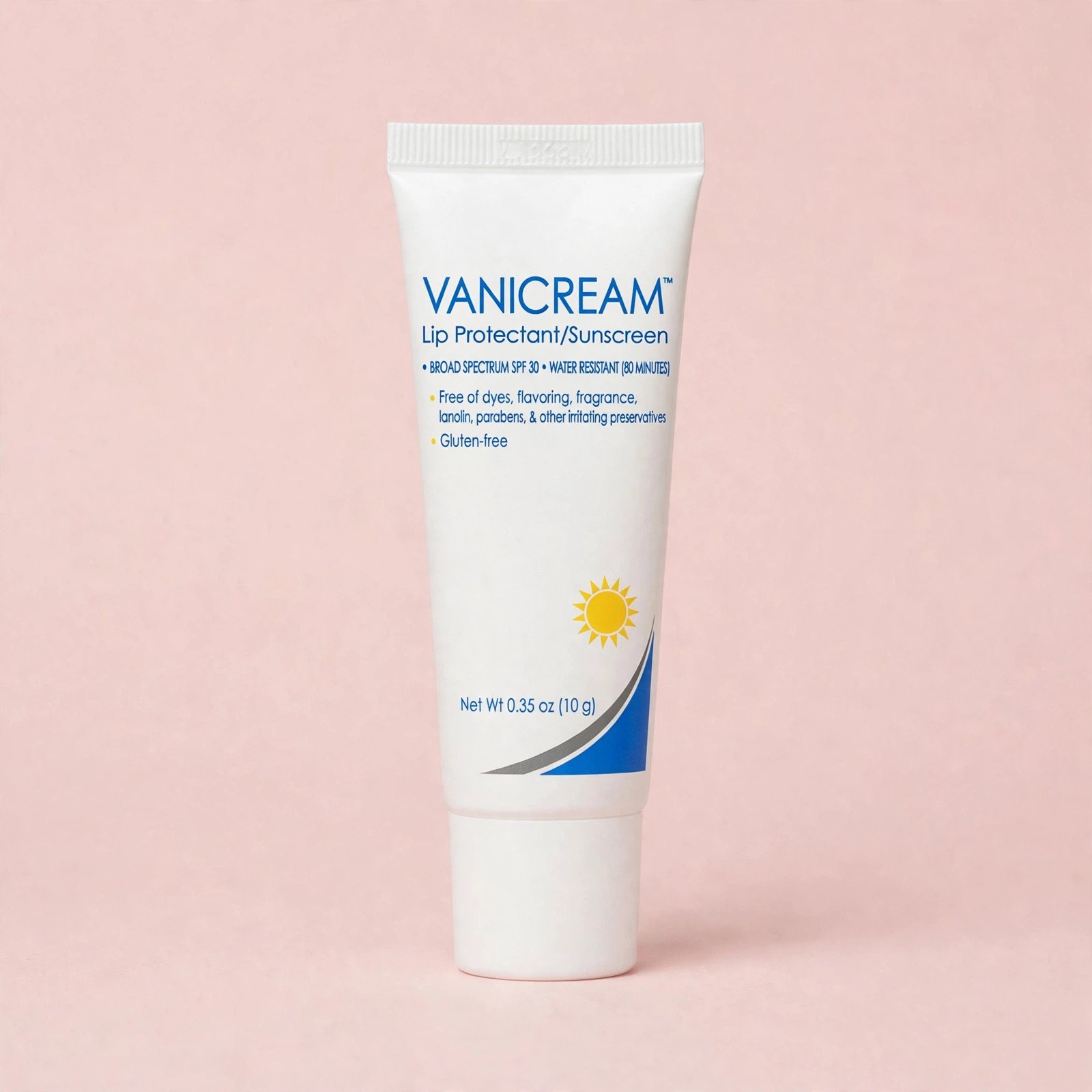
Vanicream Lip Protectant SPF 30
a fragrance free lip balm with sun protection.
Reapply through the day rather than loading on one thick layer in the morning, and put a layer on before bed, because lips lose moisture overnight. If your lips stay cracked no matter what you use, look at habits before products. Lip licking, matte lipsticks worn daily, and toothpaste running over the lip edge at brushing time are all common culprits.
8. A gentle body lotion for sensitive skin all over
Sensitive skin rarely stops at the face. If your arms or legs itch after a shower, a fragrance free body lotion used daily can help. Apply it while skin is still slightly damp, when it holds moisture best.
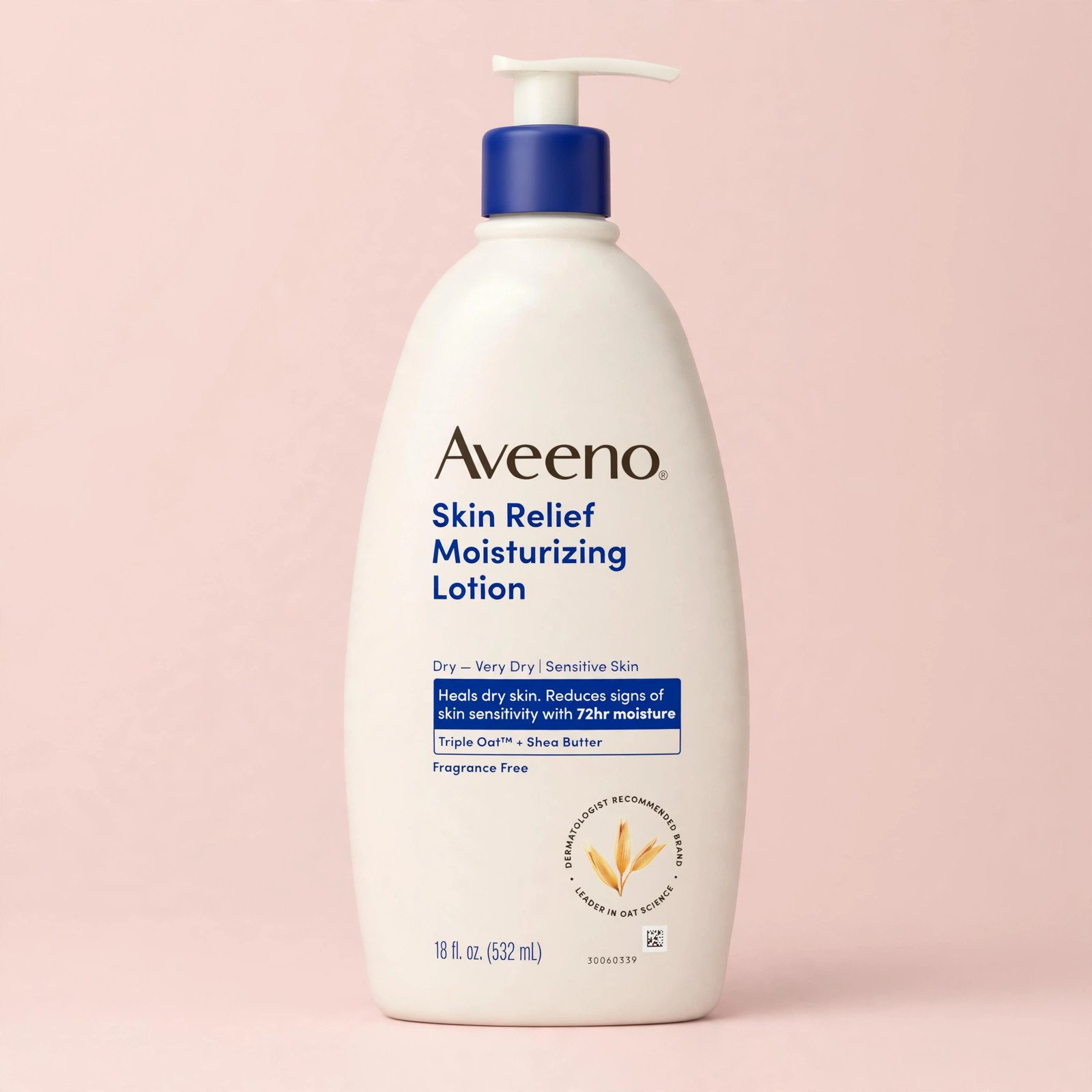
Aveeno Skin Relief Moisturizing Lotion
a fragrance free body lotion with colloidal oatmeal, for dry and sensitive skin.
Timing is the whole trick here. Lotion on dry skin an hour later does half the work of lotion in the first few minutes after you towel off. Shorter, lukewarm showers help too, because long hot showers are one of the most common reasons body skin itches in winter. Keep one bottle where you actually shower, not in a cabinet you have to walk to, because the best routine is the one that happens without thinking.
9. A fragrance free hand cream
Hands get washed more than any other part of the body, and soap strips them quickly. A fragrance free hand cream, used after washing and before bed, helps stop dryness and cracking.
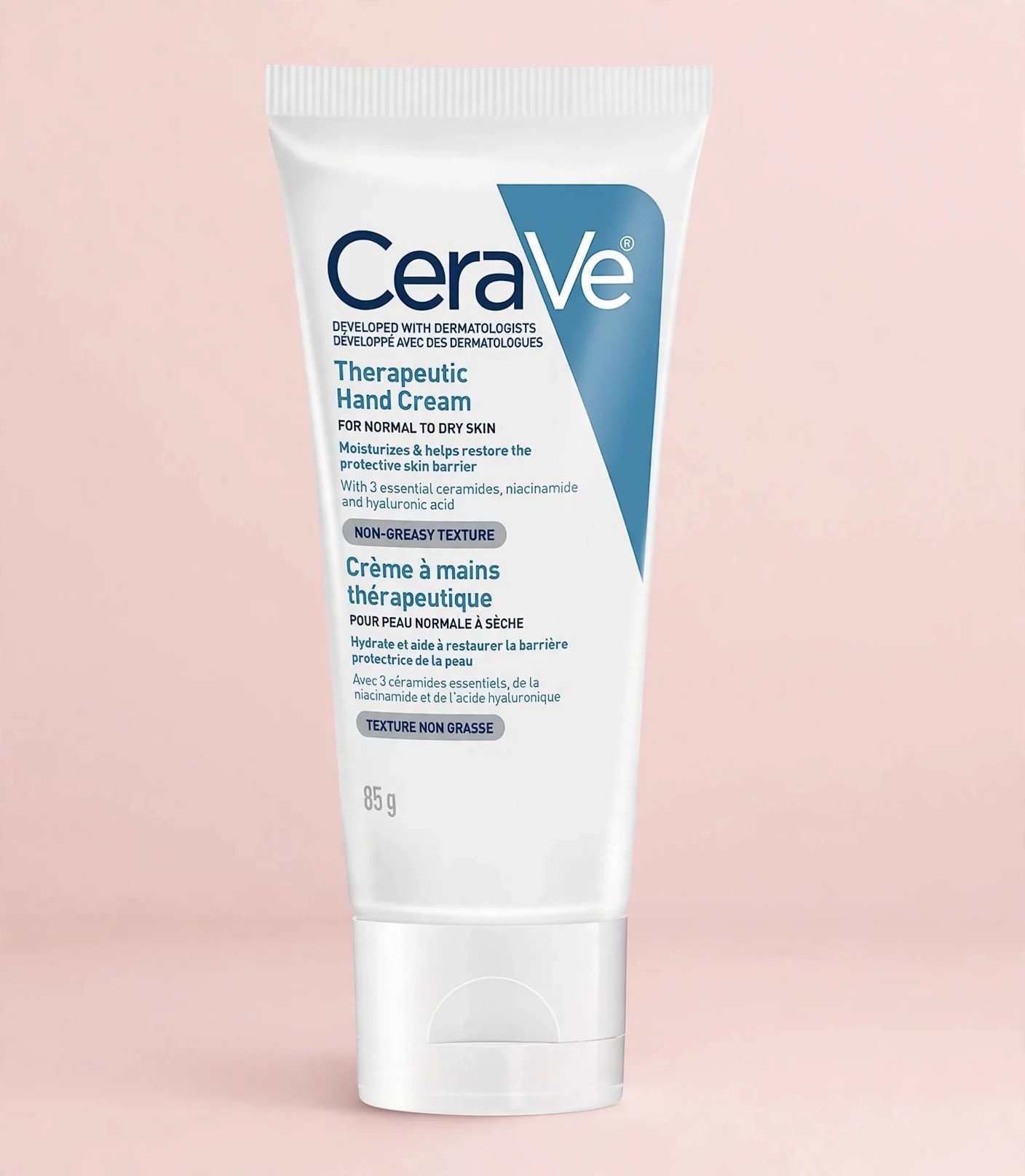
CeraVe Therapeutic Hand Cream
a fragrance free hand cream with ceramides and hyaluronic acid.
The after-washing habit is the one that counts. Cream applied once at night cannot undo ten washes during the day, so keep a tube by the sink as well as by the bed. For very dry hands, apply a thicker layer before sleep. If your knuckles crack in winter, that overnight layer is the single most effective change most people can make.
10. A calming cleanser for makeup days
On days when you wear makeup, a gentle cleansing oil can remove it without the scrubbing that irritates sensitive skin. Massage it over dry skin, add a little water to turn it milky, rinse, and wash with your usual cream cleanser if you like a second cleanse.
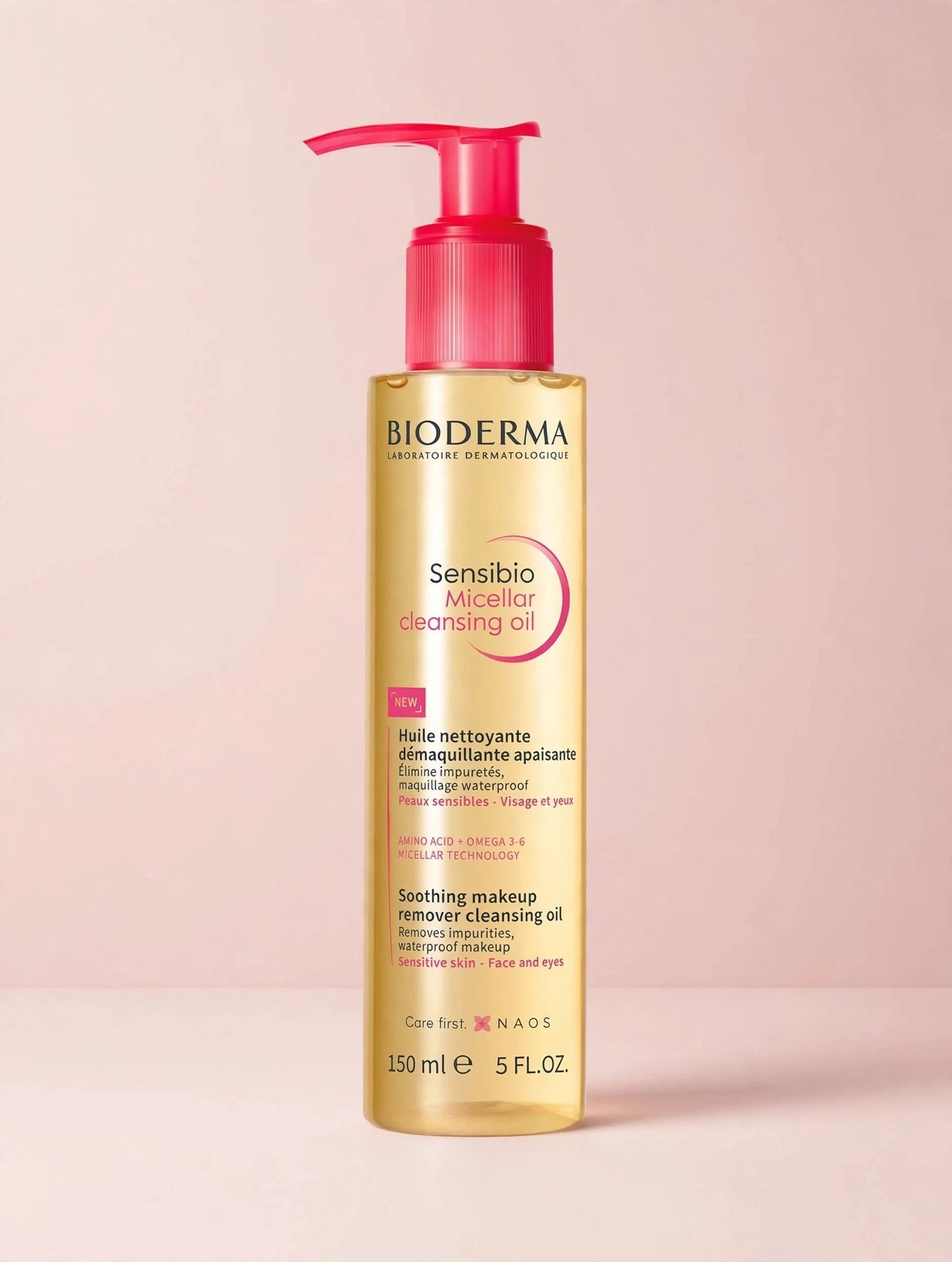
Bioderma Sensibio Micellar Cleansing Oil
a fragrance free cleansing oil for sensitive skin that removes makeup and sunscreen.
Technique again. The oil goes on with dry hands to a dry face, and you give it a slow thirty seconds of massage so it can dissolve makeup and sunscreen properly. Add a splash of water and massage again as it turns milky, then rinse. Rushing this step and tugging with a makeup wipe instead is exactly what the oil is meant to replace. A second cleanse afterwards is optional. On light makeup days the oil alone is enough, and skipping the second wash is one less thing for your skin to react to.
What to leave out while your skin settles
While you are calming reactive skin, a few things are worth pausing. Physical scrubs with gritty particles, strong leave-on acids, fragranced toners, and alcohol-heavy products all ask more of your barrier than it can give right now. So does trying a new product every few days. None of this is forever. It is a quiet period, usually a few weeks, after which you can add things back one at a time and actually learn what your skin likes.
How to build your routine from this list
Start with three things: a cleanser, a moisturiser, and sunscreen. Use them for two weeks and watch how your skin feels. Is it less tight after washing? Less red by evening?
A simple day looks like this. Morning, rinse with water or cleanse gently, moisturise, then sunscreen. Night, cleanse (with the oil first if you wore makeup), moisturise, and lip balm before bed. The serum, the lighter lotion, and the hand and body products slot around those basics wherever your own skin asks for them. Add only one new product at a time, with at least a week between additions. That patience is not wasted time, it is how you end up with a shelf of things you trust instead of a shelf of maybes.
Fewer products, calmer skin
Sensitive skin usually calms down when you take things away, not when you add more. One cleanser, one moisturiser, and one sunscreen from this list, each patch tested first, is a complete start. Fragrance free products with short ingredient lists will do more for you than any miracle claim on a label.
