
Protein or Moisture? How to Tell What Your Hair Actually Needs
Affiliate Disclosure: This post contains affiliate links. As an Amazon Associate I earn from qualifying purchases, at no extra cost to you. Buying through these links helps support Blushra and keeps our guides free to read. Product prices and availability can change, so please check Amazon for the latest details. See the Affiliate Disclosure page for more information.
Dry, frizzy hair is usually described as one problem, but underneath it there are two opposite ones. Hair can be dry because it lacks moisture. It can also feel dry and rough because it lacks protein, or because it has had too much of one and not enough of the other. The frustrating part is that the fixes are opposites too. Loading protein onto hair that needs moisture makes it stiffer. Loading moisture onto hair that needs protein makes it softer and weaker.
That is why a product that transformed someone else’s hair can do nothing for yours, or make it worse. Before you buy anything, it is worth spending two minutes finding out which side your hair is on. There is a simple test for it, and your hair gives you signs every day once you know what to look for.
What protein and moisture actually do
Hair is mostly made of a protein called keratin. Protein gives a strand its structure and strength, the scaffolding that lets it bend without snapping and hold a style once it is dry. Colouring, bleaching, heat, and general wear chip away at that structure over time, which is why damaged hair often needs protein most.
Moisture is about water and flexibility. Well moisturised hair stretches a little, feels soft, and lies smoother, because a hydrated strand is a flexible strand. Moisture comes from water and conditioning products, and it is held in by oils and creams that slow down evaporation.
Healthy hair is not all one or all the other. It is a balance, and the balance shifts. Freshly bleached hair may need protein for a month and then mostly moisture after that. That is normal, and it is why testing beats guessing.
The stretch test
Take a single strand of hair. A shed strand from your brush is perfect, because there is no need to pull one out. Wet it, hold it between your fingers at both ends, and stretch it gently and slowly.
If the strand stretches a little and then returns to its length when you let go, your balance is roughly right. Keep doing what you are doing.
If the strand barely stretches and snaps quickly, it is too rigid. That points to needing moisture, or to having too much protein.
If the strand stretches a long way, feels limp or almost gummy, and then breaks or stays stretched out, it needs protein. There is not enough structure left to spring back.
Do the test on a wet strand, because dry hair snaps more easily and gives a misleading answer. One strand is a guide, not a lab result, so read it together with the signs below.
Signs your hair needs protein
Hair that is short on protein usually feels weak rather than dry in the usual sense. It goes limp and mushy when wet, like overcooked noodles. It stretches and stretches instead of springing back. Styles fall out quickly because the hair cannot hold them, and the ends can look stringy even right after a wash.
This side often shows up after a stretch of heavy moisturising, lots of masks, leave-ins, and oils, with no protein anywhere in the routine. It also shows up on hair that has been bleached or chemically treated and never given any structural support afterwards. If your hair feels soft but behaves badly, soft is the clue. More softness is not the fix.
Signs your hair needs moisture
Hair that is short on moisture is the more familiar picture. It feels dry and rough to the touch, tangles easily, looks dull, and frizzes because the raised surface catches on everything. It snaps rather than stretches. The ends are usually the driest part, because they are the oldest hair you have.
This is the side the basic routine is built for. If this sounds like your hair, start with How to Care for Dry, Frizzy Hair: A Simple Routine That Works and give it a few weeks before you test again. And if you have not already, it is worth checking the wider causes too, in Why Is My Hair So Dry and Frizzy? 9 Causes and What Helps, because hard water and hot water can keep hair dry no matter how much conditioner you use.
Yes, you can overdo both
Too much protein is called protein overload. Hair goes stiff, dry, and straw-like, and it breaks instead of bending. It often follows enthusiastic use of protein masks, rice water, or products with keratin high in the ingredients, used too often. The fix is to stop the protein, clarify gently once, and moisturise for the next few washes until the flexibility comes back.
Too much moisture is sometimes called moisture overload, or hygral fatigue. Hair becomes over-soft, limp, and stretchy, and it can feel almost slippery when wet. The fix is the mirror image. Ease off the masks and leave-ins for a while and add a protein treatment.
Neither state is permanent. Hair cannot heal, but the imbalance lives in your routine, and routines can be changed. A few weeks of swinging the other way usually settles it.
How to add protein when the test says so
Look for treatments that list hydrolysed protein, keratin, rice protein, wheat protein, or amino acids in the ingredients. A dedicated protein mask or treatment, used once and then reassessed, is a better start than switching your whole routine to protein products. For most hair, a protein treatment every four to six weeks is plenty, and hair that is not damaged may need it less often than that.
A gentler home option is a rice water rinse. Soak rinsed rice in water for a day, strain it, pour it through washed hair, leave it a few minutes, then rinse and condition. It is mild, which makes it a reasonable first step, but mild cuts both ways. If your hair is badly in need of protein, a formulated treatment will do more.
After any protein treatment, follow with moisture. Condition as normal, even if the treatment felt rich. Protein without moisture after it is how overload starts.
How to add moisture when the test says so
Moisture is the slower, steadier job. Conditioner at every wash, left on for a few minutes rather than rinsed straight off. A deep conditioning mask once a week. A leave-in or a few drops of oil on damp ends to hold the water in. Warmth helps a mask work harder, so a shower cap over it while you wait is a cheap upgrade.
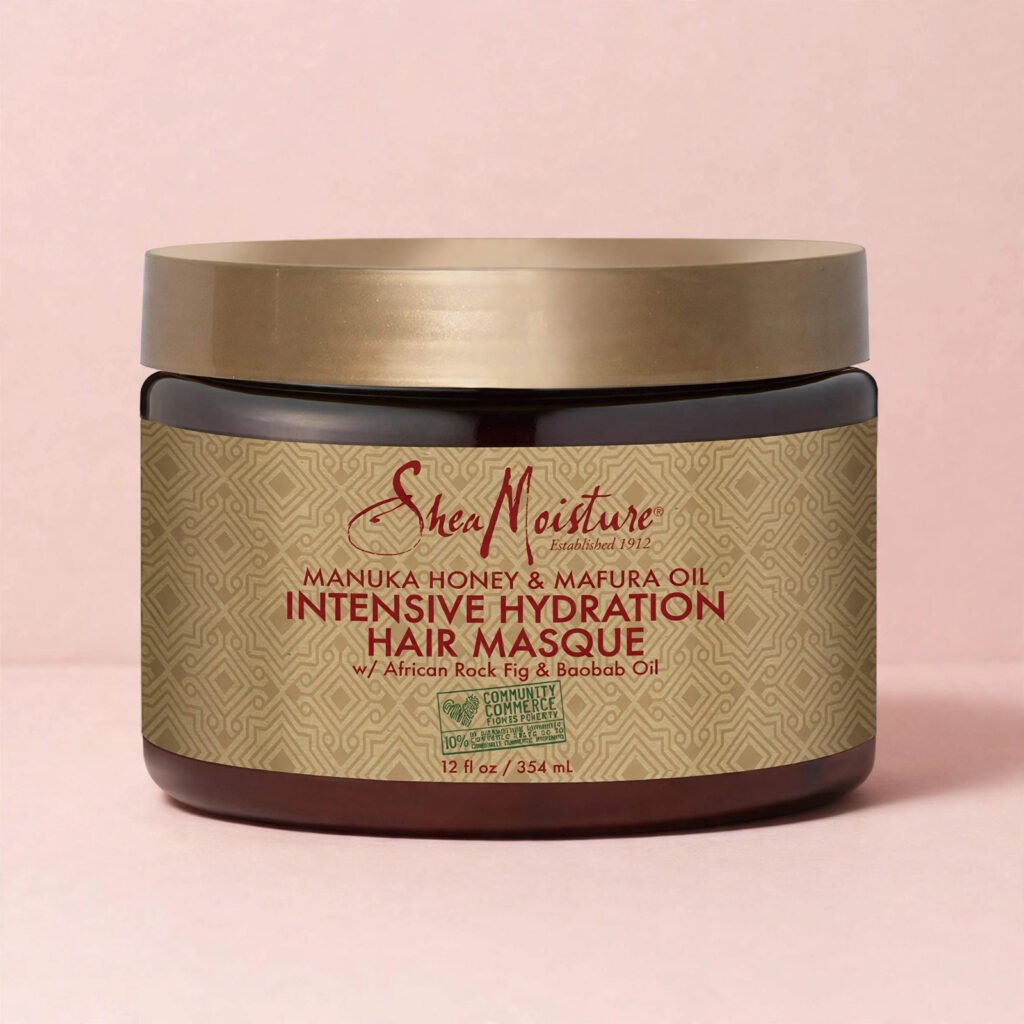
SheaMoisture Intensive Hydration Hair Masque, Manuka Honey & Mafura Oil
a deep-conditioning mask for the moisture side of the balance. Use it once a week on the lengths and ends, for ten to fifteen minutes, in place of your regular conditioner.
Give moisture two or three weeks before you judge it. Hair that has been dry for months does not rehydrate in one wash, and the stretch test will start to change before the mirror does.
Keeping the balance once you find it
Once your hair feels right, the aim is to stop swinging. Alternate rather than commit. If you use a protein treatment monthly, keep the rest of the routine moisture based. If your hair loves moisture, watch for the first signs of limpness and let that be your reminder.
Retest every month or two, and after anything big, a colour appointment, a holiday of sun and swimming, a change of water. And change one thing at a time. The balance is only hard to find when three new products arrive in the same week.
Test first, then treat
Most frustrated hair care comes from treating a guess. Two minutes with one wet strand tells you which direction to go, and the signs confirm it. Test, treat that side, then test again in a few weeks. It is slower than buying the product everyone is talking about, and it works considerably more often.




6 Comments