Dry, Frizzy Ends: How to Fix Them Without Cutting It All Off
Affiliate Disclosure: This post contains affiliate links. As an Amazon Associate I earn from qualifying purchases, at no extra cost to you. Buying through these links helps support Blushra and keeps our guides free to read. Product prices and availability can change, so please check Amazon for the latest details. See the Affiliate Disclosure page for more information.
Frizz often starts at the ends. The top of your hair can look smooth while the last few inches stick out in every direction, catch on each other, and refuse to sit flat no matter how much product you smooth over them. That is not a styling failure. The ends are the oldest part of your hair, the part that has survived every wash, every hot tool, and every rough towel, and they show it first.
The good news is that dry ends do not always mean a big cut. Some ends are simply dry and can be brought back with moisture and sealing. Others are split, and those need trimming, but only the split part needs to go. The skill is telling the two apart, then giving the dry ones what they actually need instead of treating the whole head the same way.
Split ends are not the same as dry ends
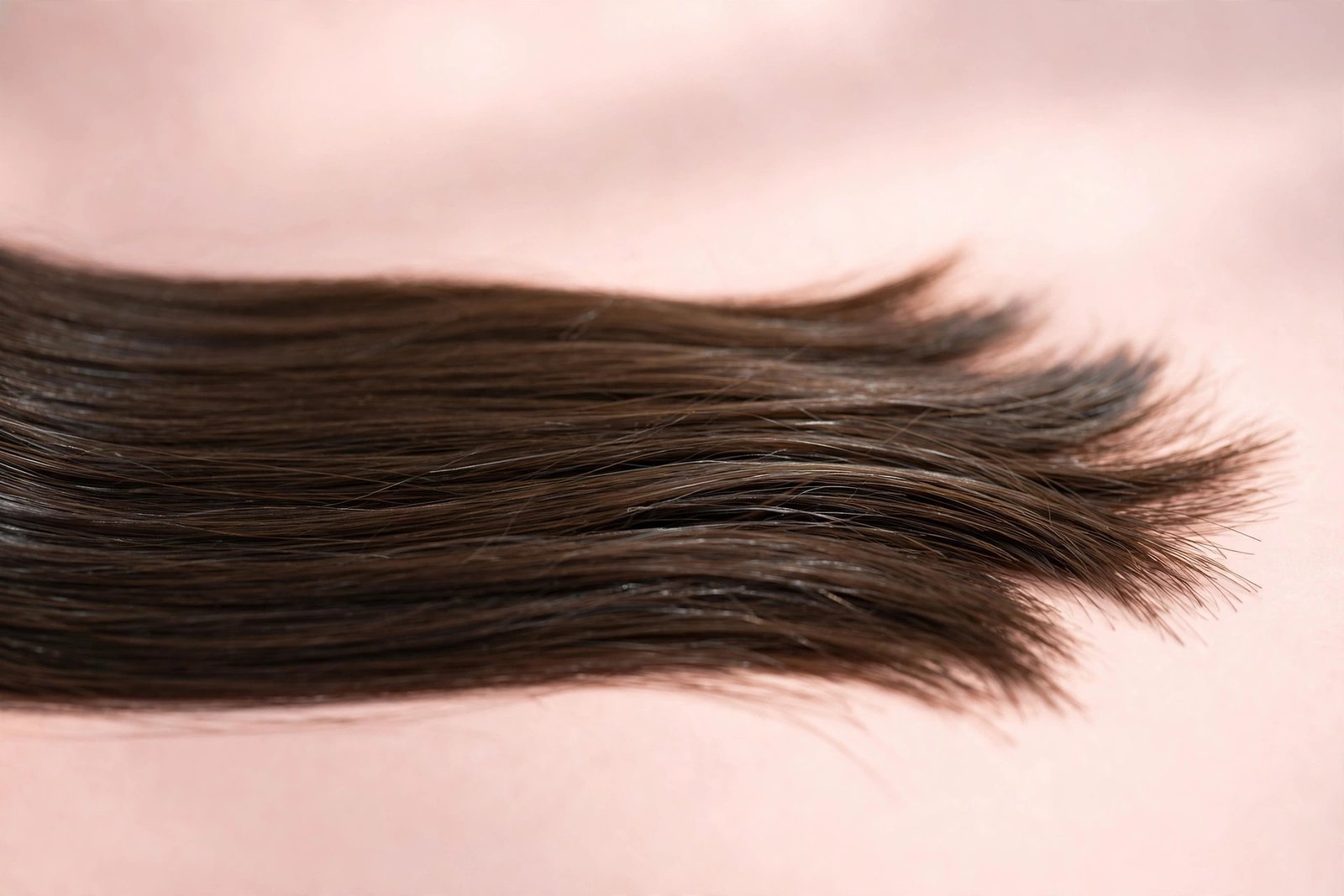
Hold a few ends up to the light and look closely. A split end forks into two or more strands, sometimes with a tiny feathered tip or a white dot where the strand is about to break. A dry end looks rough and dull, it may bend or kink, but it stays in one piece.
This matters because the fix is different. Moisture will not glue a split back together. No mask, oil, or leave-in can rejoin a strand that has separated, and products that claim to seal splits only coat them until the next wash. A split end needs to be cut off above the split, or it will keep travelling up the strand and make the frizz worse.
A dry end, on the other hand, is a moisture problem. The surface is lifted and rough, so it catches the light badly and catches on neighbouring strands. Moisture, gentle handling, and a seal can smooth it again. If you are not sure which you have, take a small section and check ten or twelve ends. If most are forked, trimming comes first. If most are whole but rough, treatment comes first.
If the dryness runs through the whole length and not just the ends, the cause is usually wider. Why Is My Hair So Dry and Frizzy? 9 Causes and What Helps lists the nine, and most whole-length dryness traces back to one or two of them.
Why the ends dry out first
The ends are the furthest from your scalp, and the natural oil your scalp makes rarely travels that far, especially on longer hair or hair with any wave or curl. So the ends rely almost entirely on what you put on them. Every wash takes a little more out of them, and every hot tool, rough towel, and tight hair tie takes a little more again.
Heat is the biggest culprit. The ends are the thinnest part of the strand, so they heat up fastest and dry out fastest. Straightening the same ends every day, or running a dryer on high heat with the nozzle pointing up into the hair, roughens the surface a little more each time. Sun and wind do the same work more slowly, which is why ends often look worst at the end of summer.
Friction finishes the job. Ends rubbing against a collar, a bag strap, or a rough pillowcase lose their smooth surface bit by bit. That is why the same hair can look fine in the morning and frizzy by the evening, and why the overnight advice in How to Prevent Frizzy Hair Overnight and Refresh It in the Morning matters for ends as much as for the rest of the hair.
Trimming: how much, and how often
If your ends are split, trimming is not a defeat. It is the only fix, and a small trim now saves a bigger cut later, because a split that is left alone keeps climbing.
Ask for a dusting if the splits are only at the very tips. A dusting takes off a few millimetres, just the damaged tip, and leaves the length alone. If the splits run higher, or the ends feel thin and see-through, a trim of one to two centimetres is more honest. A good cut for frizzy ends is one that removes the damage without taking length you wanted to keep, so say that out loud before the scissors come out.
How often depends on how fast your ends wear out. Hair that is heat styled often or worn long usually needs a small trim every eight to twelve weeks. Hair that is mostly air dried and left alone can go longer. The test is the ends themselves. If they tangle the moment you finish brushing, or they look frayed even right after a wash, they are asking for a trim.
Between trims, search and destroy is a useful habit for a few stubborn splits. Sit in good light, take small sections, and snip only the strands that are clearly split, cutting just above the fork. Do it with sharp hair scissors, never paper scissors, which crush the strand and create a new split. Ten minutes once a month is enough.
Deep condition the ends, not just the hair
A weekly mask is the fastest way to bring dry ends back, but only if it actually reaches them. Most people apply a mask to the top of their head and the ends get whatever is left. Reverse that. Apply the mask to the ends first, generously, then work the remainder up through the lengths. The ends are the part that needs it most.
Leave it on for ten to fifteen minutes, longer than a normal conditioner, and keep the hair warm while it works. A shower cap or a warm towel over the hair helps the mask sink in instead of sitting on the surface. Rinse with lukewarm water, not hot, so you do not undo the work by opening the surface back up again.
Do this once a week for a month before you judge it. Ends improve across several treatments, not inside one, because each mask adds a little moisture back and the seal from the last one is still partly there when the next one goes on.
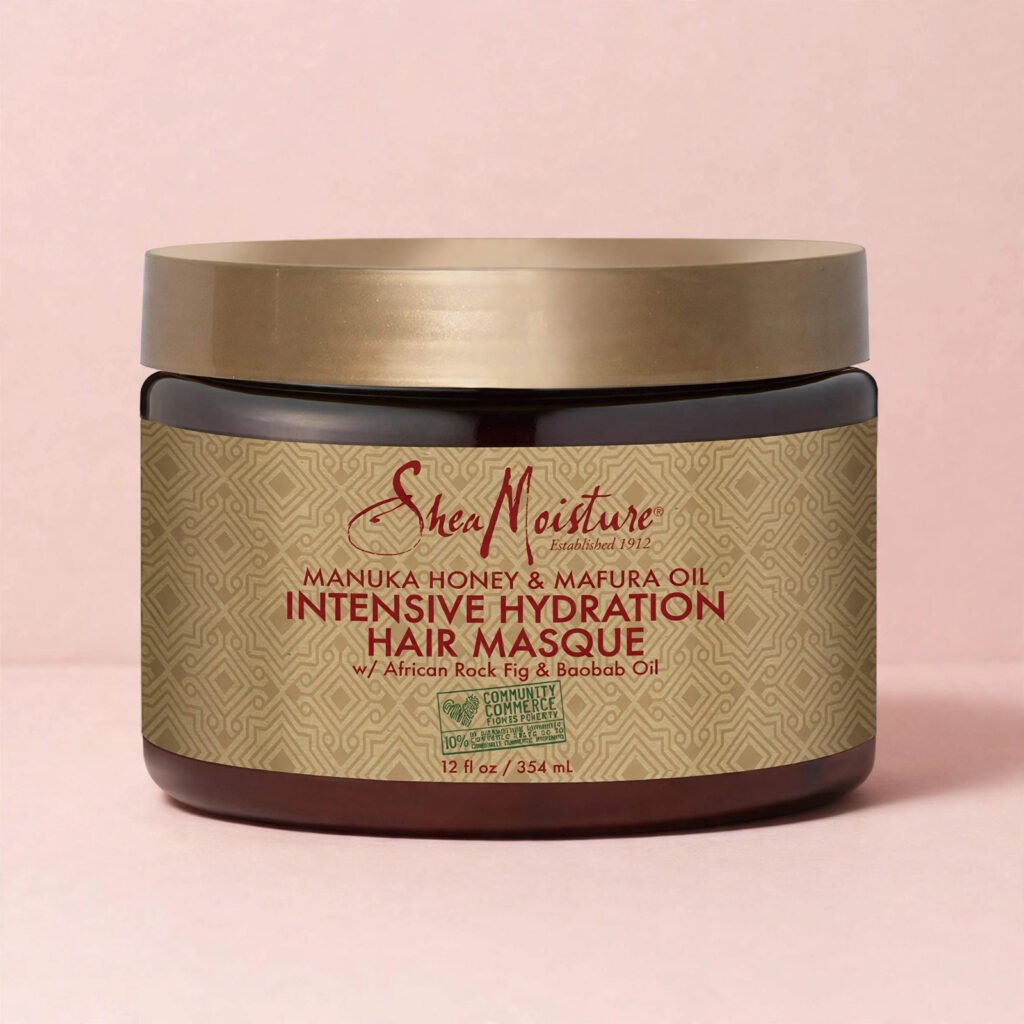
SheaMoisture Manuka Honey and Mafura Oil Intensive Hydration Hair Masque
A thick mask for dry hair, used on the lengths and ends once a week. Apply it to the ends first, leave it for ten to fifteen minutes, then rinse with lukewarm water.
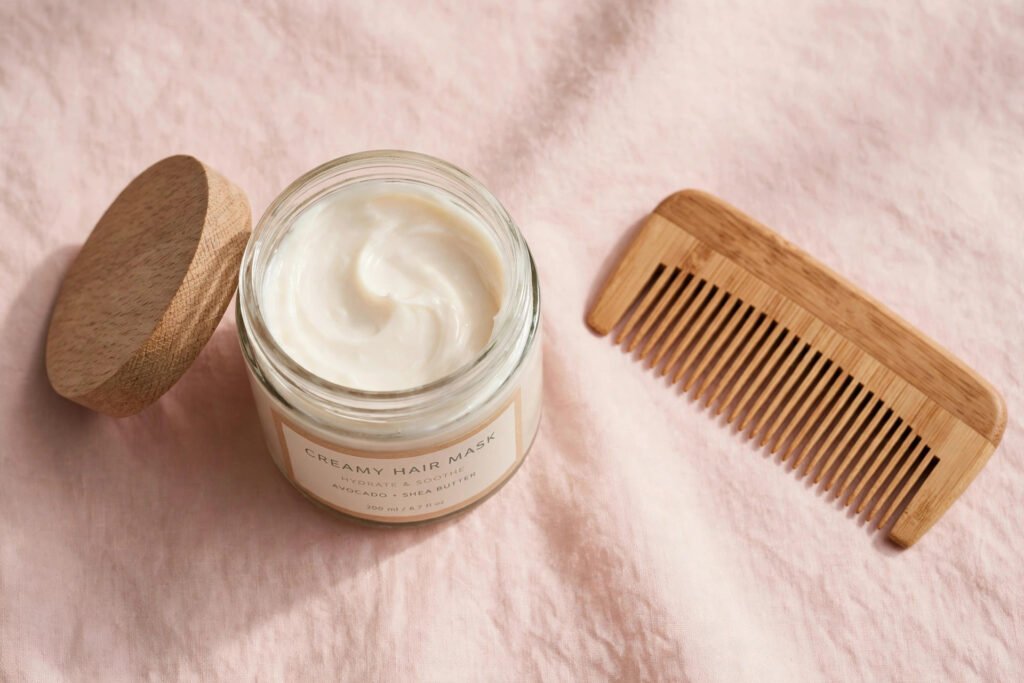
If your hair feels limp or coated after a mask, you may be using too much, or leaving it on too long. A thin, even layer on the ends is enough. And if your hair feels stiff and straw-like after protein-heavy treatments, check whether it needs moisture rather than more protein. The stretch test in Protein or Moisture? How to Tell What Your Hair Actually Needs takes two minutes and saves a lot of guessing.
Seal the ends every day
A mask once a week is not enough on its own. Ends lose moisture every day, so they need a small daily seal. A drop or two of oil, or a pea-sized amount of leave-in, smoothed over the ends on damp hair after washing, keeps the surface closed while the hair dries.
The key is small and on the ends only. Oil on the roots makes hair look greasy, but oil on the last few inches just makes them look finished. Warm the drop between your palms first, then smooth it over the surface of the ends rather than raking it through. Raking breaks the surface open again.
On non-wash days, the same trick works as a quick fix. If the ends look frizzy by the afternoon, smooth a tiny amount of oil over them with your palms and leave it alone. Do not brush the ends to fix them. Brushing lifts the surface and makes the frizz worse, especially on dry ends.
Stop washing the ends like the roots
The wash itself is often what dries the ends out. Shampoo is for the scalp, where the oil and dirt actually are. Scrubbing shampoo through the lengths and ends strips them of the little moisture they have, and they never fully recover between washes.
Use shampoo on the scalp only, and let the rinse carry it down through the ends. That is enough to clean them without stripping them. Conditioner goes the other way round: on the lengths and ends, where the dryness lives, and left for a few minutes. The full wash-day method is in Why Is My Hair Frizzy After Washing? (And How to Stop It), and it is worth following closely if your ends frizz after every wash.
Hot water is the other wash-day culprit. Very hot water opens the surface of the hair and leaves the ends rougher. Lukewarm water for the wash, and a lukewarm or cool rinse at the end, keeps the ends smoother. It feels like a small change, and for ends it is often the change that shows first.
Heat on the ends needs a different rule
If you straighten or curl your hair, the ends take the most heat, so they need the most protection. Always use a heat protectant, and make sure the hair is completely dry before the plates or the iron touch it. Styling damp ends boils the water inside the strand and roughens the surface, which is exactly the damage you are trying to fix.
Work in small sections and use one slow pass rather than several fast ones. Every extra pass is another dose of heat on the thinnest part of the hair. Let each section cool before you touch it, because cooling is when the shape sets. And if you can, leave the very ends out of the last pass, or turn the heat down for them. A slightly softer end looks better than a perfectly straight one that frizzes an hour later.
Humidity makes all of this harder, because dry ends drink in damp air faster than healthy hair does. On humid days, seal the ends before you go out, not after they have already frizzed. The sealing method in How to Stop Frizzy Hair in Humidity works on ends first, because they are the part the air reaches first.
A simple ends routine for two weeks
Put it together, and the routine is short. Wash with lukewarm water, shampoo on the scalp only, conditioner on the lengths and ends left for a few minutes. Seal the ends with a drop of oil or a little leave-in on damp hair. Once a week, a mask on the ends for ten to fifteen minutes. Trim the splits, dust the tips, and keep heat low and protected.
Follow that for two weeks, which is three or four washes and two masks, and look at the ends in the same light as before. If they are smoother and tangle less, the routine is working and the ends were dry. If they still fork and fray, they were split, and a trim will do more than another month of products. That is the full routine in miniature. The longer version, with the wash, the mask, and the weekly rhythm, is in How to Care for Dry, Frizzy Hair: A Simple Routine That Works.
Ends tell the truth, then you decide
Dry ends are not a verdict on your hair. They are the oldest, hardest worked part of it asking for a little more care than the rest. Check whether they are split or just dry, trim what is split, feed what is dry, and seal it every day. Do that for a few weeks, and the ends stop being the part you hide and start being the part that shows the routine is working.



2 Comments