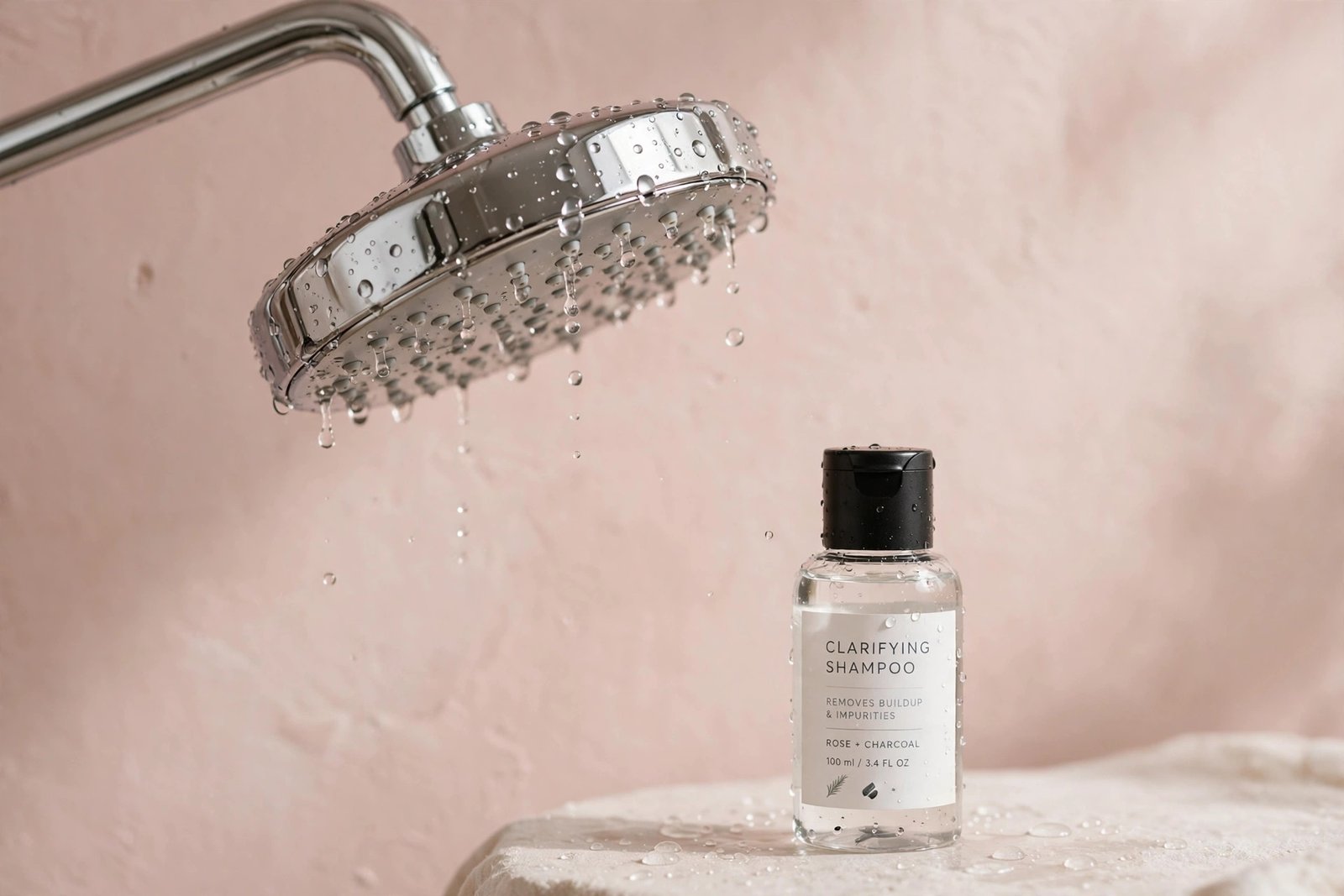
Hard Water Hair: Signs Your Water Is Drying Your Hair Out
Affiliate Disclosure: This post contains affiliate links. As an Amazon Associate I earn from qualifying purchases, at no extra cost to you. Buying through these links helps support Blushra and keeps our guides free to read. Product prices and availability can change, so please check Amazon for the latest details. See the Affiliate Disclosure page for more information.
Some frizz does not come from your shampoo, your dryer, or your routine. It comes from the water itself. If your hair turned rough and dull after a move, or it slowly got worse even though you changed nothing, the water running through your shower may be the thing that changed.
Hard water is water with a high level of dissolved minerals, mostly calcium and magnesium. You cannot see them, but your hair can feel them. Every wash leaves a thin mineral layer behind, and that layer builds up wash after wash, coating the strand, blocking moisture, and making even a good routine stop working. The fix is different from ordinary frizz, because no amount of extra conditioner will help while the coating is still there.
What hard water actually is
Water picks up minerals as it travels through rock and soil. In some areas it picks up a lot, and in others almost none, which is why the same shampoo can work beautifully in one town and fail in the next. The minerals are not dirt, and they are not dangerous in the water you drink, but on hair they behave like a fine, invisible scale.
You can often see the signs around the house before you notice them on your hair. White chalky marks on taps, a crusty ring around the showerhead, spots on glasses after washing up, and soap that never quite lathers are all classic hard water signs. If your kettle furs up quickly, your water is probably hard. Your hair is simply the softest surface the same water touches.
The signs on your hair
Hard water hair has a particular feel. It is dry, but not in the way that a missed conditioner leaves hair dry. It feels coated, almost waxy, and it stays that way even right after washing. Here are the signs to look for, and the more of them you have, the more likely water is the cause.
First, hair that feels rough and tangles easily, especially at the ends. The mineral layer roughens the surface, so strands catch on each other. Brushing pulls, and the ends frizz no matter how gently you handle them.
Second, conditioner stops working. You apply the same conditioner that used to leave your hair soft, and now it does almost nothing. The mineral coating sits between the conditioner and the hair, so the moisture never quite gets in. People often buy a richer conditioner at this point, which does not help either, because the problem is the barrier, not the product.
Third, hair looks dull and feels heavy. The mineral layer reflects light badly, so shine disappears, and the coating adds weight, so hair looks flat at the roots and frizzy at the ends at the same time.
Fourth, colour fades faster. If you colour your hair, hard water is a known culprit for colour that washes out quickly or turns brassy, because the minerals sit on the strand and change how light hits it.
Fifth, the scalp itches or flakes. Minerals can build up on the scalp too, leaving it dry and irritated, and shampoo that does not rinse clean because the water itself leaves a residue behind.
Sixth, frizz that does not respond to anything. If you have worked through the usual causes in Why Is My Hair So Dry and Frizzy? 9 Causes and What Helps, fixed your wash in Why Is My Hair Frizzy After Washing? (And How to Stop It), and the frizz is exactly the same, water is worth checking next.
How to tell for sure
You do not need to guess. A few simple checks will tell you whether your water is hard.
Look at the taps and the showerhead. White, chalky deposits that come back soon after cleaning are the clearest sign. Check the kettle too. Limescale inside a kettle is hard water, full stop.
Try the soap test. Hard water makes soap and shampoo lather poorly, so if your shampoo barely foams and your hands feel filmy after washing, the water is working against the product.
Use test strips if you want a number. Hard water test strips are cheap, sold for aquariums and home testing, and they change colour to show the mineral level. Dip one in tap water and compare it to the chart. Anything in the hard range, and your hair is being washed in mineral water every day.
Do the clarifying wash test. Wash your hair once with a clarifying shampoo, follow it with a good conditioner, and see how it feels when it dries. If it suddenly feels softer, lighter, and easier to brush, that is strong evidence. The clarifying wash stripped the mineral layer off, and your hair is telling you what it feels like without it. If it feels exactly the same, water is probably not the cause, and the wider list of causes is the better place to look.
Clarifying is not the same as chelating
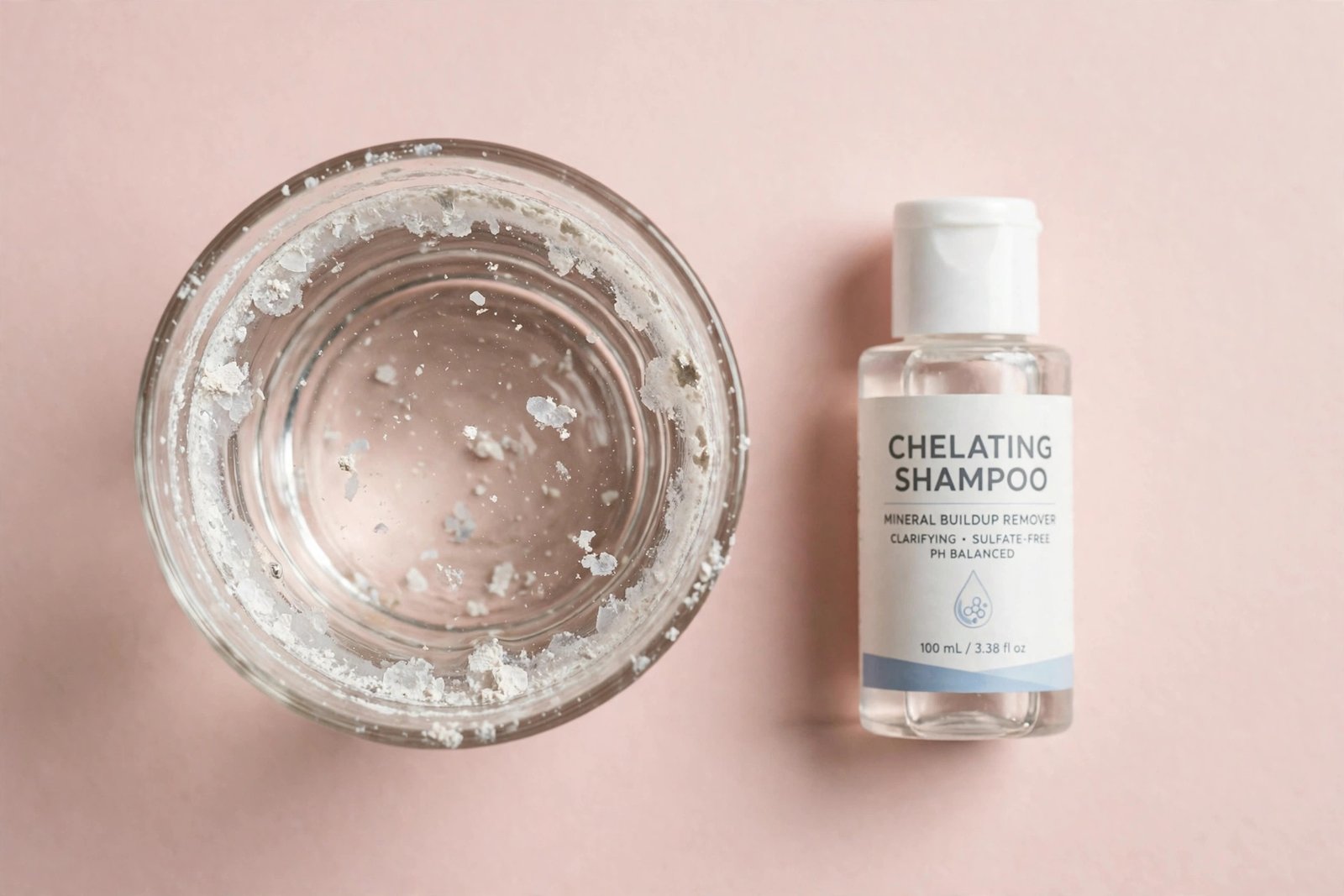
This is the distinction that matters most, and it is where people waste money. A clarifying shampoo removes product buildup: styling products, silicones, and oils sitting on the surface. A chelating shampoo removes mineral buildup: the calcium and magnesium from hard water, bound up and rinsed away.
A clarifying shampoo will help a little with hard water, because it strips the surface, but it does not bind the minerals properly, so the effect fades fast. A chelating shampoo is made for the job. It contains ingredients that grab the minerals and carry them off in the rinse. Look for words like chelating or hard water on the label, or ingredients such as EDTA, which is the common chelating agent.
Use a chelating shampoo the way you would use a treatment, not as your everyday wash. Once every one to two weeks is enough for most people in hard water areas. Apply it to wet hair, work it through the lengths as well as the scalp, because the minerals are on the whole strand, and leave it for two to three minutes before rinsing. Follow it with a proper conditioner or a mask, because a chelating wash strips the hair bare and the moisture needs putting back right away.
Do not use it every wash. Overdoing it strips the hair too far and leaves it drier than the hard water did. Once every week or two, followed by conditioning, is the rhythm that works.
An everyday routine for hard water areas
You cannot change the water coming out of the tap, but you can change how much of it stays on your hair.
Wash with lukewarm water, not hot. Hot water opens the surface of the hair and lets more minerals settle in. A lukewarm wash and a lukewarm rinse leave less behind.
Use a gentle shampoo on the scalp only, and let the rinse carry it down. Scrubbing shampoo through the lengths in hard water just grinds the minerals into the ends. The wash-day method in the frizzy after washing article is worth following here too, because a gentle wash leaves less coating behind in the first place.
Condition the lengths and ends properly, and leave the conditioner on for a few minutes. In hard water, conditioner has to work through a thin mineral layer, so give it time. A weekly mask helps here as well, especially on the ends, which carry the most buildup. The mask step in How to Care for Dry, Frizzy Hair: A Simple Routine That Works is the same one, and it matters more, not less, when the water is hard.
Seal the ends after washing with a drop of oil or a little leave-in on damp hair. A sealed surface picks up less mineral residue on the next wash, and it keeps the moisture from the conditioner inside while the hair dries. On humid days this matters twice over, because hard water hair drinks in damp air fast. The sealing method in How to Stop Frizzy Hair in Humidity is the one to use.
Filters, rinses, and what actually helps
A shower filter is the most asked about fix, and the honest answer is that it helps a little, not a lot. Most shower filters soften the water slightly and catch some minerals, but they do not turn hard water into soft water. If you buy one, expect softer feeling hair and slightly better lather, not a transformation. Change the filter on schedule, or it stops doing even that.
A final rinse with distilled water is more effective, and more fiddly. Rinsing with a jug of distilled water after your normal wash leaves no minerals behind on the surface, because distilled water has none to leave. It is worth trying for a week to see the difference, but few people keep it up for every wash, so treat it as a test, not a routine.
An apple cider vinegar rinse is often suggested, and it can help a little by smoothing the surface and removing light buildup, but it is not a chelating wash. If you try it, dilute it well, one part vinegar to four parts water, use it once in a while after shampooing, and rinse it out. Undiluted vinegar is too strong for hair and scalp, and it will not remove a real mineral layer on its own.
What does not help is piling on heavier products. Thick oils and heavy creams trap the mineral layer underneath them, and the hair ends up coated twice over. Light, regular conditioning and a proper chelating wash every week or two does more than any heavy product will.
When it is not the water
Hard water is a real cause, but it is not the only cause, and it is worth checking the others before you buy a filter or change your whole routine. If the clarifying wash test changes nothing, look elsewhere. Dry, frizzy ends that never settle are often split, and no water fix will help them. That is covered in the dry ends article. Hair that is dry all over, not just rough and coated, usually needs moisture or protein, and the stretch test in Protein or Moisture? How to Tell What Your Hair Actually Needs will point you the right way.
And if your hair is worst in the morning, check the overnight routine as well. Hard water damage shows up first after a night of friction on a rough pillowcase, and the overnight fixes in How to Prevent Frizzy Hair Overnight and Refresh It in the Morning are the other half of the picture.
Test the water before you blame your hair
If your routine stopped working and nothing you changed made a difference, stop blaming the products and test the water. Check the taps, try the clarifying wash test, and use a chelating shampoo once every week or two, followed by a proper conditioner. If your hair comes back softer and lighter, you have found the cause, and it was never your hair at all. It was the water it was washed in.



One Comment